
How Can We Help?
-
Słownik pojęć
- Klient OPC
- MQTT (Message Queuing Telemetry Transport)
- REST/REST API
- OPC – Standard Komunikacji Przemysłowej
- OPC UA – Nowoczesny Standard Komunikacyjny
- OPC DA (Classic) – Starsza Technologia, Nadal w Użyciu
- Serwer OPC
- OPC Classic kontra OPC UA
- OPC UA Pub/Sub
- Fundacja OPC
- Specyfikacje OPC
- Specyfikacje towarzyszące
- OPC XML
- DCOM
- ThingWorx Kepware Server
- Modbus
- IIoT – Industrial Internet of Things
- Bloki zoptymalizowane w PLC Siemens
-
Producenci
-
Produkty
- Kepware Server / KEPServerEX ( Kepware )
- OPC Router ( Inray )
- Manubes ( Inray )
- OPC UA Forge ( Prosys OPC )
- OPC UA Monitor ( Prosys OPC )
- OPC UA Browser ( Prosys OPC )
- OPC Classic Simulation Server ( Prosys OPC )
- OPC UA SDK for Java ( Prosys OPC )
- Sentrol OPC UA & Classic SDK for Delphi ( Prosys OPC )
- Historian ( Prosys OPC )
- Modbus OPC Server ( Prosys OPC )
- OPC UA Simulation Server ( Prosys OPC )
- OPC Classic Client ( Prosys OPC )
- ACCON-OPC-Server UA ( Deltalogic )
- OPC Server ( Tani )
- PLC Engine Collect ( Tani )
-
Rozwiązania
Baza wiedzy
OPC XML
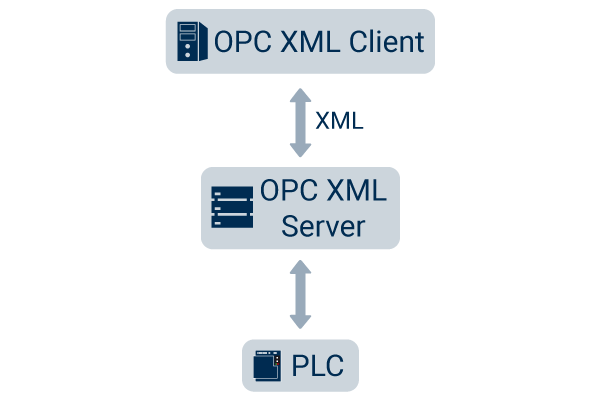
OPC XML był pierwszą próbą uniezależnienia standardu OPC oraz zerwania powiązania z technologią Microsoftu, opartą na XML i technologiach internetowych. Umożliwia przesyłanie danych za pośrednictwem różnego formatu m. in. XML oraz binarnie. Choć opublikowano go w 2003 roku, to już trzy lata później został zastąpiony przez nowoczesny standard OPC UA. Co spowodowało, że OPC XML szybko stał się przestarzały.